It is far too easy to select the cheapest and most basic luminaires on the basis that cost efficiency is the main driver but selecting a product that is fit for purpose based on cost alone is risky.
It is vital that when considering a design brief that technical aspects of the luminaires are balanced with important key features of the luminaires that may not be obvious. These would include; cost of future maintenance and the associated link with the manufacturer’s warranty period, the efficiency and polar light distribution of the luminaires together with potential controls built within the product that can all improve any future energy savings way beyond the payback period of the initial capital cost of the lighting installation.
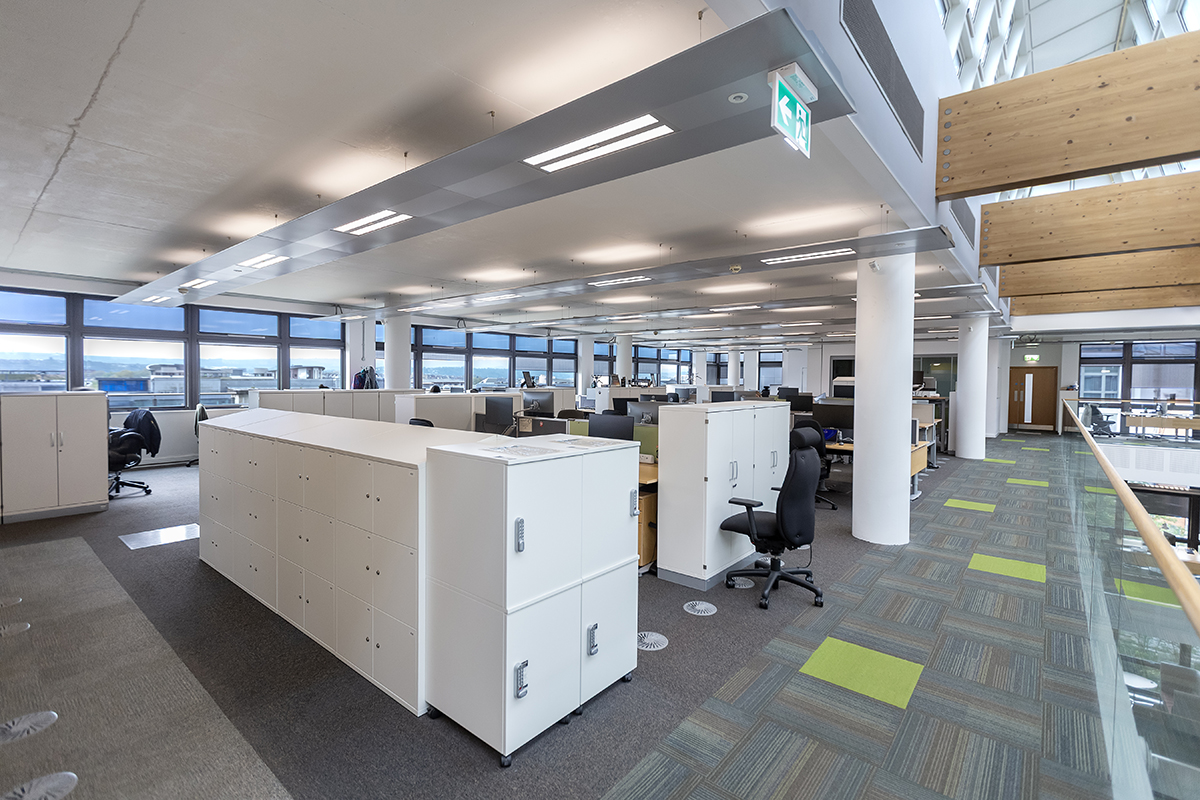
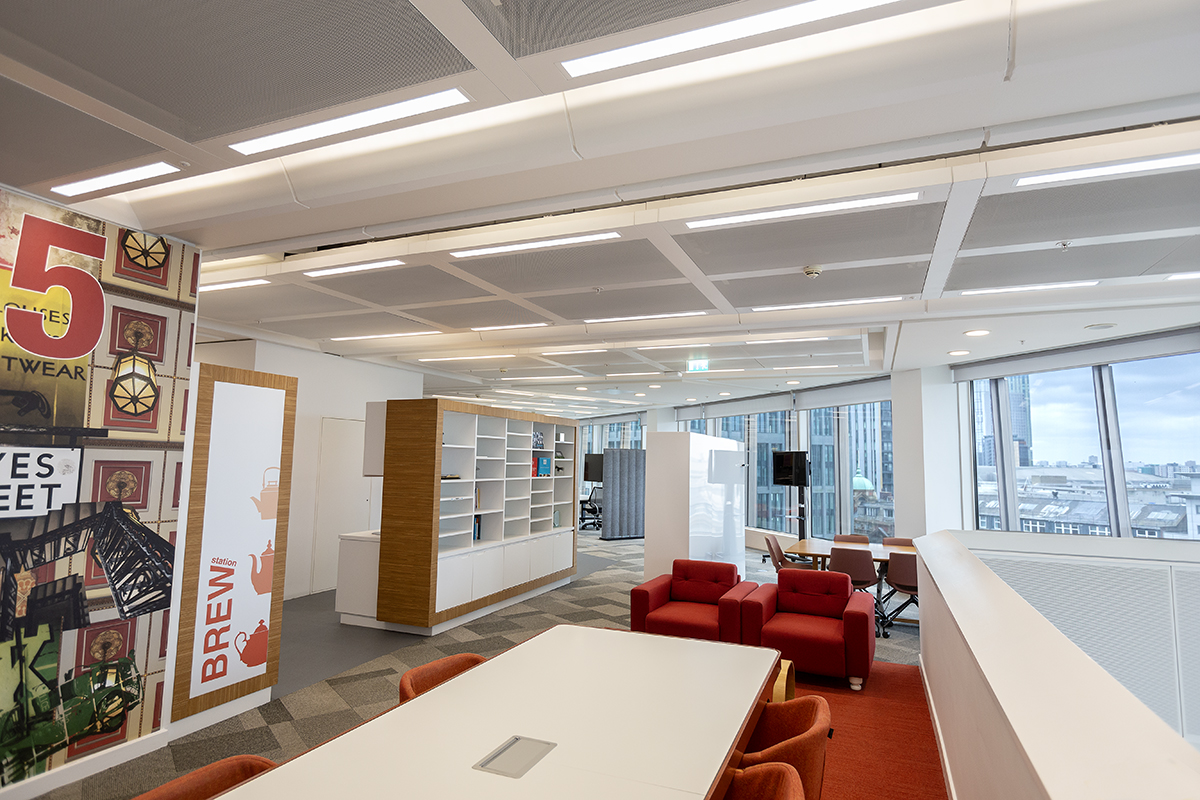
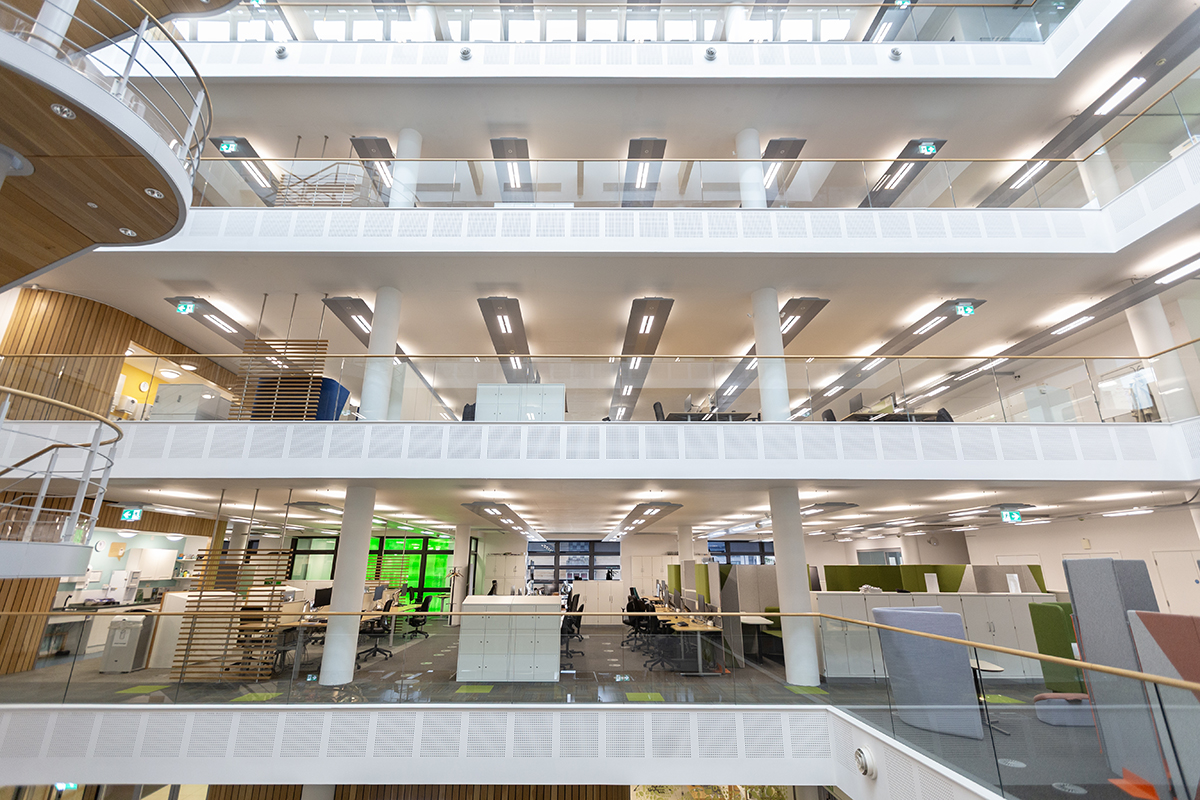
It is very common to see a suspended ceiling in an office which composes of 600x 660mm or 1200 x 600mm MF tiles and with this in mind the design will need to consider the optimum spacings that suit both the room shape and polar distribution of the product. Focus of the design will be on uniformity, optimum light levels based on the tasks and extra consideration for the controls. Controls do not need to be complicated, simply adding a dimmable driver with push to make switches will give a cost effective solution for dimming functionality, reducing wasted energy on over lit spaces. Lighting control systems that monitor both movement of occupants and available daylight can deliver great energy savings whilst making the most of the benefits of the natural daylight. As well as harvesting daylight and intelligently increasing efficiency, lighting and specific lighting controls can now help harmonise artificial lighting with the human circadian rhythm. The lighting can mimic the natural progression of daylight to support the body’s natural sleep-wake cycle promoting alertness and proper relaxation when it is needed.
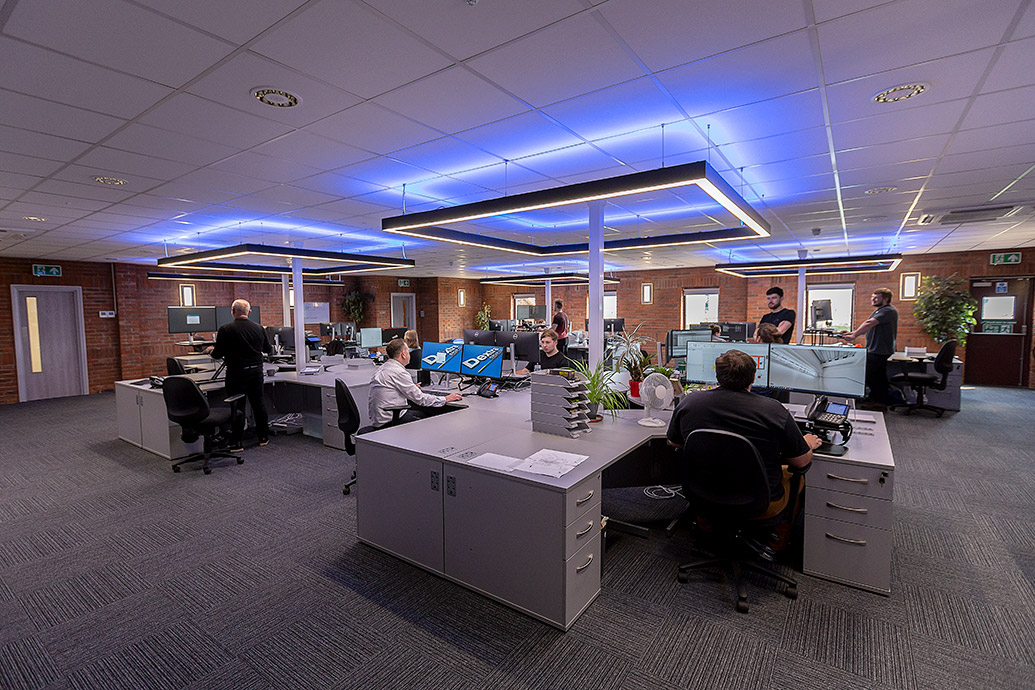
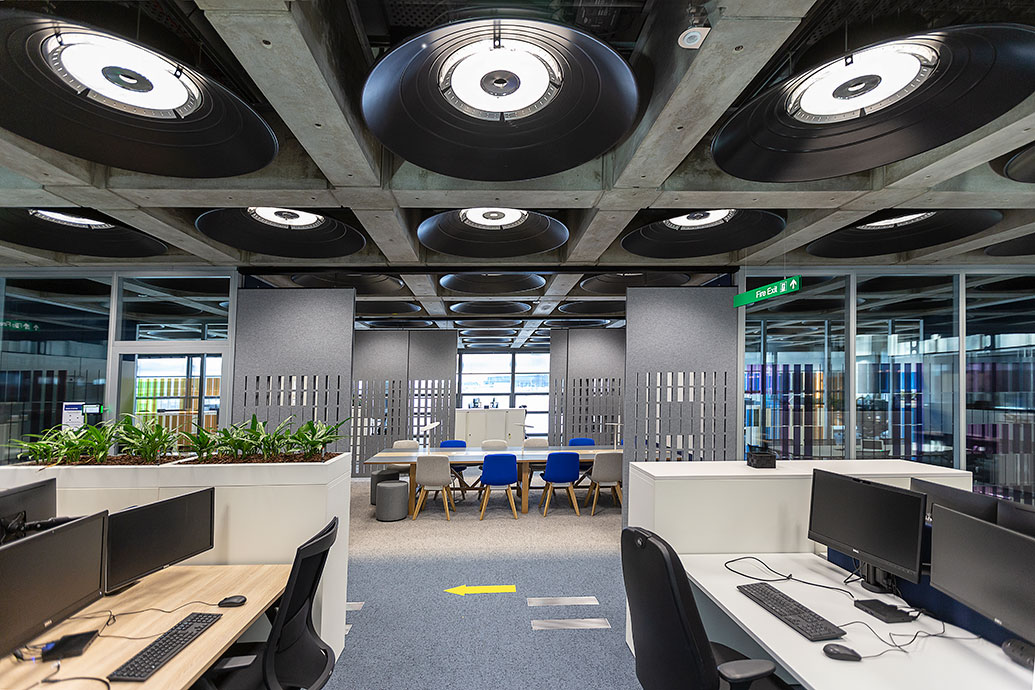
Designing solely with compliance at the heart of the specification can however lead to predictable and uninteresting office spaces with glare restrictions dictating optics. Luminaire style and illuminance levels are of course still of paramount importance, however the creativity imposed on the design by the lighting designer can transform the look of the office delivering a visually interesting workspace that encourages alertness and productivity.
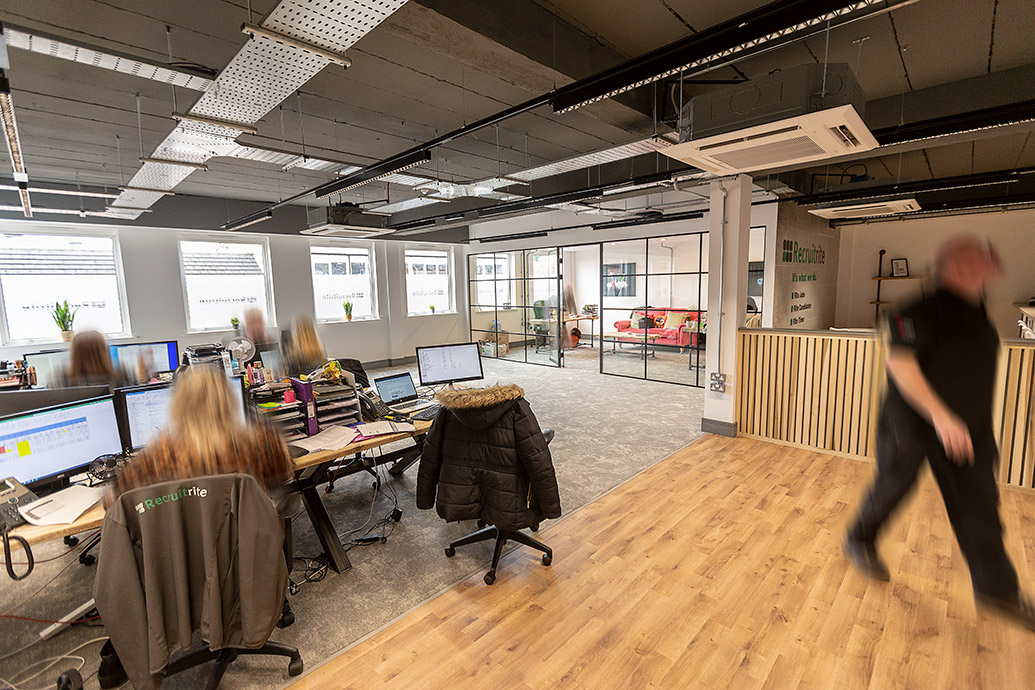
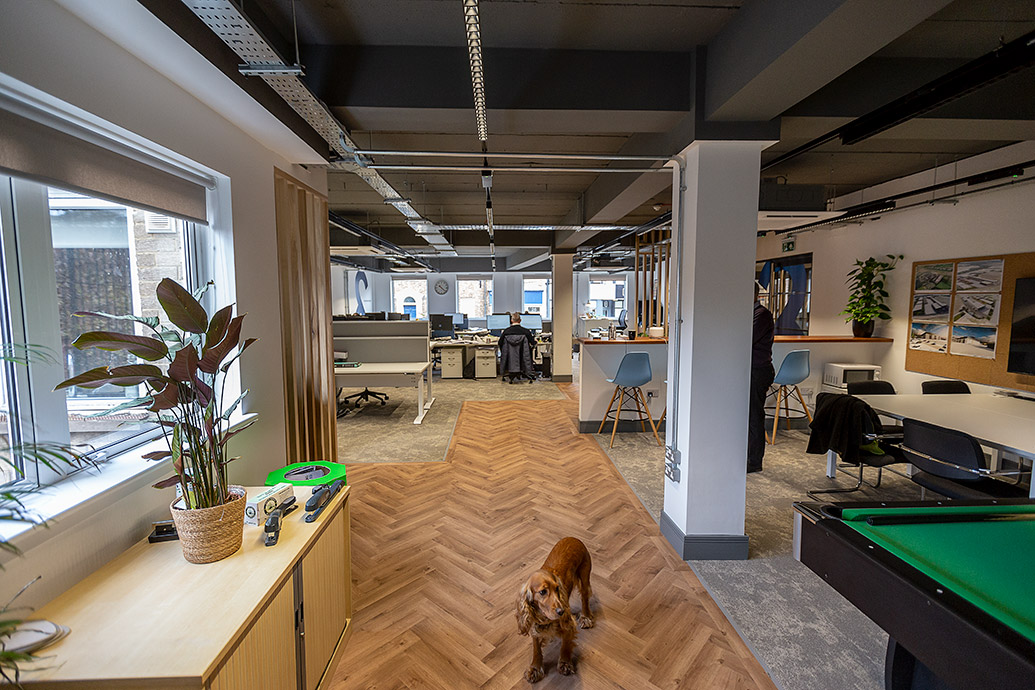
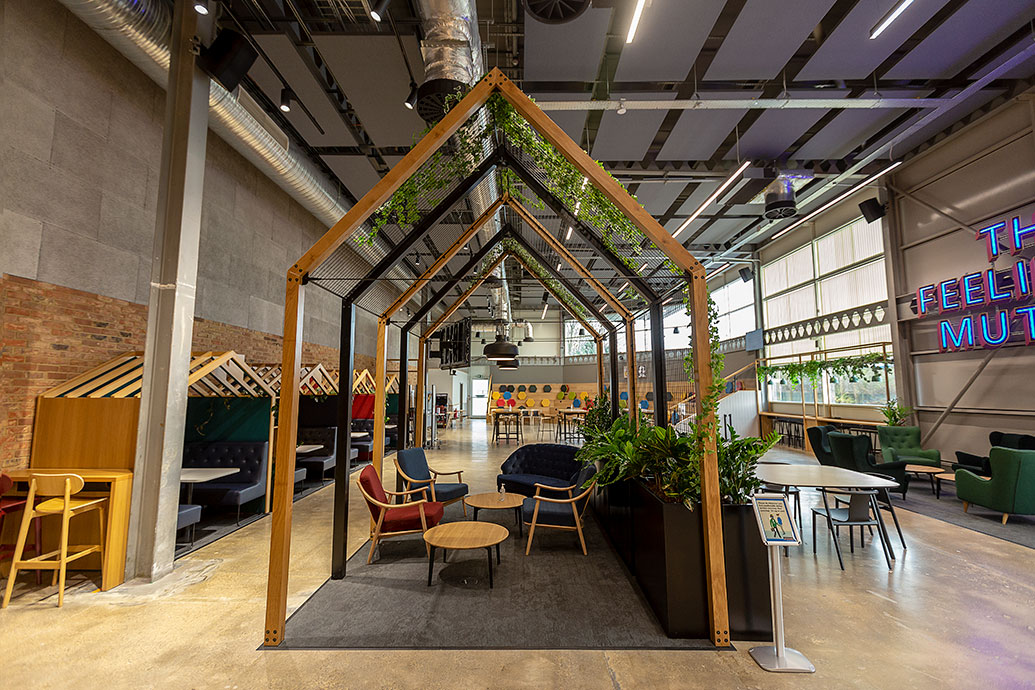
It is always important to remember that the task of the occupants are local to the space they are working and the levels of illuminance that are being achieved should reflect this and be scaled relative to the task being carried out. This enables lighting level variation through mixed product selection and application of lighting controls. Identifying core task areas, circulation and break out spaces alike encourages the use of specifically tailored lighting and controls for these areas rather than generic and repetitive use of the same style and function throughout the space.
All of this can be achieved through a careful and subtle use of lighting that washes walls and ceiling, choosing lights that have both direct and indirect light sources with a combination of wall washing or grazing lights delivers a lighting solution that has uniform lighting on specific task areas while using diversity to create interest.
When there is a careful consideration of the office space being lit, the roles and tasks being carried out, the amount of daylight available and the clients expectations, the designer can design and propose a balanced, complaint and dynamic lighting scheme for an office with quality luminaires that will deliver first class lighting for longer.
A properly thought out office lighting design can assist in completely transforming the mood, wellbeing and the overall ambience of the space while maintaining or improving the specific lighting requirements for productive working conditions and optimised energy usage.
For more office case studies click here.